
Genetic Counseling in Iowa


Overview
A Multidisciplinary Consortium to Advance Genetic Counseling in Oncology
Advances in the accuracy and efficacy of genetic testing have made it an essential tool when seeking to provide precision cancer treatment. However, many patients with cancer do not get optimal genetic counseling/testing when indicated. To ensure that cancer clinicians are following the latest clinical recommendations around genetic counseling/testing, the Iowa Oncology Society (IOS), working in collaboration with the Association of Cancer Care Centers (ACCC), developed a multiphase initiative to inform quality improvement (QI) opportunities.
The goal of the consortium’s work is to discuss and address barriers to genetic testing, counseling, and screening for patients diagnosed with cancer and their family members. Consortium members have discussions, learn from, and teach one another, and identify policy–, advocacy–, and research–based strategies to better enable the use of genetic counselors by oncologists and patients in Iowa.
For more information about this program, and if you would like to join the consortium, please contact Mary Stanley, LMSW, PMP, Program Manager.
RESOURCE LIBRARY
The IOS Cancer Genetics Resource Library connects you to curated materials to help you coordinate genetic counseling and testing for patients with cancer. Hereditary genetic test results may guide medical decisions, inform family members about their cancer risks, and identify opportunities to participate in clinical research. These resources will guide members of the multidisciplinary care team to ensure that eligible patients with cancer receive appropriate genetic counseling and testing.
ON-DEMAND WEBINAR
Examining Genetics for Families of Patients with Gastrointestinal Cancer: Addressing Challenges in Rural Communities
There is significant interest in examining the connection between cancer diagnoses and genetics. Genetic testing can identify individuals and their family members who carry gene variants, and resulting increased risk of developing gastric or other cancers. The Iowa Oncology Society hosted a one-hour webinar on May 25th that covers this topic as it relates to hereditary gastrointestinal cancer conditions.
Access this recorded program at any time to learn how to:
- Identify at-risk patients and their family members for genetic counseling and/or testing.
- Utilize mismatch repair immunohistochemistry (MMR IHC) as a screening versus diagnostic tool
- Identify available resources to help facilitate genetic testing, genetic counseling, and management of hereditary GI cancers.
Featured Publications
Genetic Counseling in Iowa (Phase 2) Practice Profiles: Norma Schmoker Cancer Center at Unitypoint Health – Trinity Regional Medical Center and St. Anthony Regional Cancer Center
One way in which the Iowa Oncology Society is helping improve cancer genetic counseling/testing in rural Iowa is by identifying and sharing best practices of rural community cancer programs effectively using it today. Learn how Norma Schmoker Cancer Center (formerly Trinity Cancer Center) is overcoming challenges in North Central Iowa such as patient resistance to traveling long distances, out-of-pocket costs, and the handling of individuals who reject the genetic testing recommendation all together. Additionally, discover several ways in which St. Anthony Regional Cancer Center is addressing the increasing number of aging adults in rural Iowa, and ensuring their clinicians continue the appropriate emphasis on genetic counseling.Download
A Multidisciplinary Consortium to Advance Genetic Counseling in Oncology
Findings from "A Multidisciplinary Consortium to Advance Genetic Counseling in Oncology" program are now available in the newly published white paper, which also highlights the tremendous work IOS has done to support this important effort.
Publication features include:
- Genetic Counseling and Testing Referrals
- Cascade Testing
- Opportunities to Improve Cancer Genetic Testing in Iowa
- NCCN Guidelines for Universal Genetic Testing
Consortium Members
The IOS Cancer Genetics Consortium is made up of multidisciplinary cancer care professionals from across Iowa. The consortium meets quarterly to discuss and address barriers to genetic counseling, testing, and screening for patients diagnosed with cancer and their family members.


[Abstract 10609] Building a multidisciplinary consortium in Iowa to advance genetic counseling and testing in patients with cancer
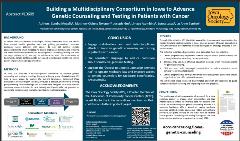
As cancer clinicians develop increasingly complex treatment plans, the results from somatic and/or germline tests are guiding personalized treatment decisions. Many patients with cancer do not get optimal genetic counseling/testing when indicated. To ensure that cancer clinicians are following the latest clinical recommendations around genetic counseling/testing, the Iowa Oncology Society (IOS), working in collaboration with the Association of Cancer Care Centers (ACCC), developed a multiphase initiative to inform quality improvement (QI) opportunities.
Presented at the American Society of Clinical Oncology 2022 Annual Meeting, June 3 - 7, 2022.
Mini Podcast
[MINI-PODCAST] Ep 72: Genetic Counseling Advocacy
Advances in the application of precision oncology have resulted in an increased demand for genetic counseling services. While the genetic counselor workforce is on the rise, disparities in access are widespread. Certain barriers to genetic counseling—from geography to business challenges— are impacting who can access, and benefit from, genetic counseling services.
In this episode, Dr. Colleen Campbell, University of Iowa Health Care, explains specific policy changes that can help ensure access across diverse patient groups–while also benefiting those hospitals and genetic counselors who provide these services.


Colleen Campbell, PhD, MS, LGC, Clinical Associate Professor of Internal Medicine, Division of Cardiovascular Medicine, Department of Internal Medicine, University of Iowa, Carver College of Medicine;
Director, Genetic Counseling Operations, University of Iowa Health Care;
Assistant Director, Iowa Institute for Human Genetics;
Secretary/Treasurer of the National Society of Genetic Counselors (NSGC)
Lunch and Learn Series
As part of the Multidisciplinary Consortium to Advance Genetic Counseling in Oncology education project, IOS hosted a series of three virtual Lunch and Learn sessions to spark conversations with local providers and stakeholders about challenges and solutions around genetic testing, counseling, and screening for patients diagnosed with cancer and their family members.
Click here to access the on-demand recordings.
Blog: Genetic Counseling in Cancer Care
Genetic counselors are healthcare professionals who have expert knowledge of how genetics contribute to the likelihood of developing disease; they help individuals understand how their unique genetic makeup may affect their health or the health of their family members. They use their knowledge to counsel patients about whether to get tested, and they help interpret test results.


Copyright © Iowa Oncology Society. All rights reserved.
Privacy Policy